

How to Plan a Multi-City Trip Without Wasting Half Your Holiday in Transit
Plan a multi-city trip without losing days to trains, flights and hotel changes. Learn the best route order, night allocation, open-jaw strategy and travel-day rules.

The short answer
The easiest way to plan a multi-city trip is to **design the route before the days**. Put the destinations in geographic order, count every hotel change as real itinerary friction, give each city enough nights to justify the move, and treat travel days as partly consumed rather than magically available for sightseeing.
A good route feels simple when you look at it: each move takes you toward the next destination, the number of bases stays low, and no city exists only because it looked close on a map. Once that skeleton works, build the individual days inside it.
Why multi-city trips fall apart
A single-city trip can survive weak structure because the hotel stays fixed and most mistakes are local. A multi-city trip creates dependencies. Changing Florence from three nights to two changes a train, a hotel, the arrival time in Venice and every activity that had already been assigned to that removed day.
The failure usually starts by choosing destinations independently. A traveller sees ten attractive cities, gives each two nights, then assumes a two-hour train costs exactly two hours. The finished itinerary contains constant packing, checkouts, stations, luggage storage and orientation days.
The cure is not more detailed scheduling. It is better architecture.
1. Start with the route, not the attraction list
Put every proposed destination on one route and ask whether the order makes geographic sense. A strong multi-city itinerary is usually linear or open-jaw: arrive in one end of the route and leave from the other rather than returning to the starting city because the flights looked familiar.
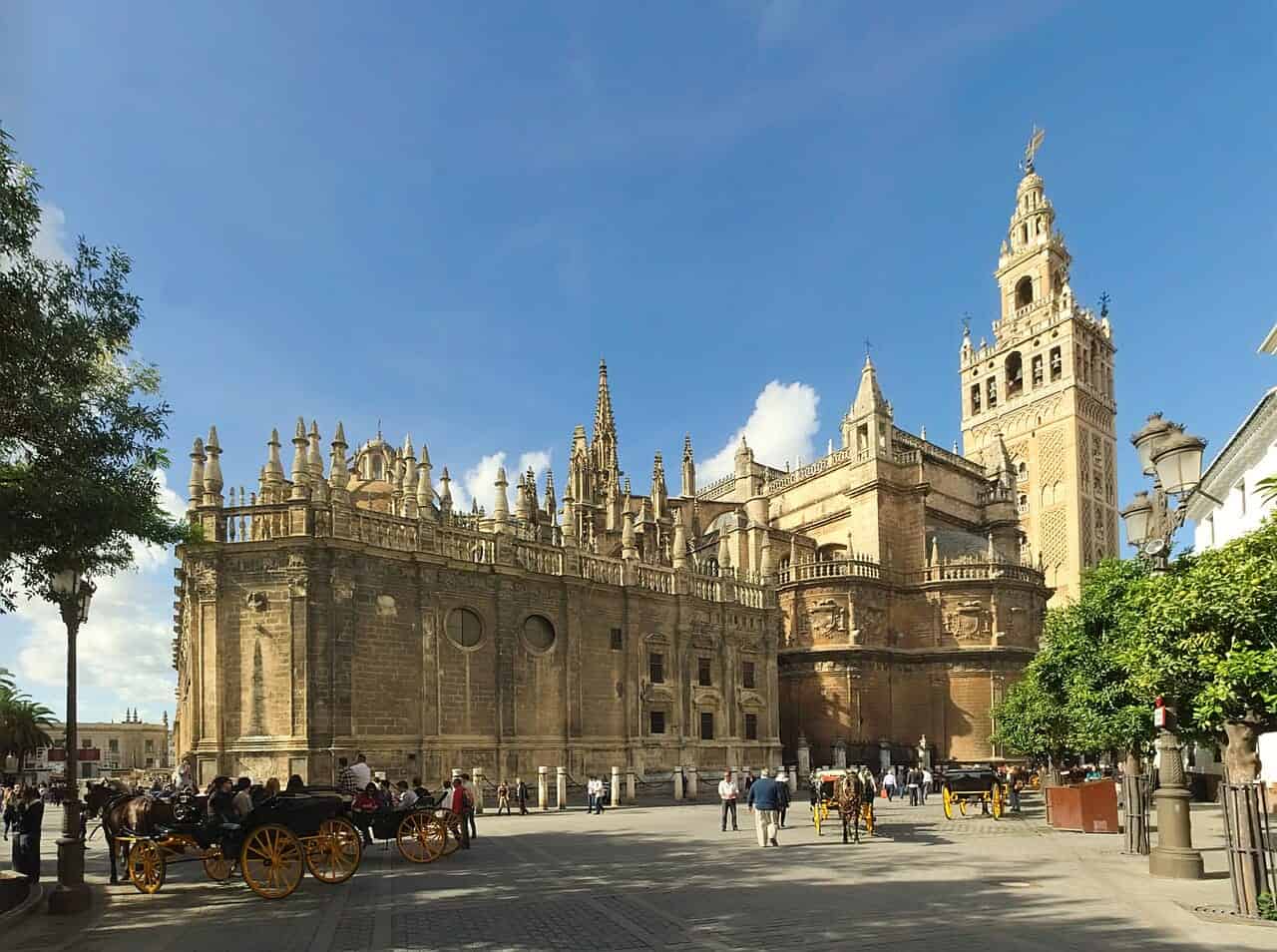
Backtracking is not automatically wrong, but it needs to earn its place. If Madrid → Seville → Granada is clean, adding Madrid again before flying home creates a new hotel change and another travel block. An open-jaw flight from Granada or Málaga may cost more on paper and save an entire usable day.
2. Calculate the transport-time tax
Do not use the scheduled train or flight duration as the travel cost. A two-hour train also contains checkout, reaching the station, buffer time, boarding, arrival, local transport, luggage and check-in. A short flight can consume even more once airports are involved.
For planning purposes, treat a city-to-city move as a **handoff block**. Ask what time you realistically leave the old hotel and what time you will be ready to begin meaningful activity in the new city. That is the usable-time number.
3. Decide whether every city deserves a hotel change
Every overnight base has a fixed cost. You unpack, learn a new area, manage another check-in and eventually repeat the checkout process. That cost is worthwhile when the destination gives enough back.
This is why a one-night stop needs scrutiny. Sometimes it is perfect: Córdoba can sit naturally between Seville and Granada. Sometimes the same place works better as a day trip from an existing base. The decision should be based on route logic and what you gain after day visitors leave, not a rule that every interesting city deserves a bed.
- Keep the overnight if evening or early-morning atmosphere matters.
- Keep it if the city sits naturally on the route and avoids backtracking.
- Convert it to a day trip if the hotel change costs more time than the destination gains.
- Drop it entirely if it exists only because it was geographically nearby.
4. Allocate nights before you allocate attractions
Once the route is stable, assign nights according to the amount of usable city time you need. Do not give every city two nights in the name of fairness. Rome and Bologna do not need identical allocations; Tokyo and Kyoto do not need identical allocations.
Start with minimum useful stays, then distribute spare nights according to your interests. A city with three major timed attractions, several neighbourhoods and a late arrival may need four nights even if another destination on the same trip feels complete in two.
5. Separate nights from usable days
Three nights does not always mean three days. Arrive at 17:00 on Monday and leave at 09:00 Thursday and you have two useful days plus two fragments. This distinction becomes critical when comparing alternative routes.
For each segment, write down arrival time, departure time and the number of full or partial sightseeing blocks between them. That exposes itineraries that look generous in hotel nights but are hollow in actual time.

6. Protect the arrival day in each new city
Do not put the most difficult reservation immediately after a transfer unless missing it would be harmless. Train delays, luggage problems and simple fatigue can turn a theoretically efficient plan into an anxious one.
Arrival days are ideal for flexible neighbourhood walks, markets, viewpoints and dinner. Put the Colosseum, Alhambra, Sagrada Família or other high-stakes timed entry on a protected day once you are already sleeping in the city.
7. Use anchors, then leave flexible space
A robust itinerary has a few anchors: booked transport, hotels, timed attractions and reservations you genuinely care about. Everything else should be arranged around them with enough slack that one delayed lunch does not collapse six later stops.
That is especially important on longer trips. The goal is not to eliminate uncertainty. It is to make sure uncertainty cannot break the structure.
8. Build each city as a geographic cluster
Once the route and nights are fixed, plan individual days by neighbourhood. This is the same logic at a smaller scale. Avoid crossing Tokyo three times in one day, or moving from Vatican City to the Colosseum to Trastevere because those happened to be the next three items on a ranking.
A multi-city itinerary therefore has two routing layers: **city order across the trip and neighbourhood order inside each city**. Solve them separately.
An example: the difference between a 10-day Italy list and a 10-day Italy route
A weak version starts: Rome 3 nights, Naples 1, Florence 2, Bologna 1, Venice 2. It looks rich because it contains five cities. In practice, four hotel changes dominate a nine-night trip.
A stronger first-trip version might be Rome 4, Florence 3, Venice 2 or 3. It contains fewer pins and more Italy. The traveller gets full museum days, evenings after day-trip crowds thin, and enough time to recover from each move.
The right answer changes with the traveller, but the evaluation method does not: compare **usable experience per handoff**, not destination count.
Open-jaw flights: the underrated multi-city planning tool
If the route begins in one major city and ends far away, search multi-city flights before automatically booking a return from the arrival airport. Flying into Rome and home from Venice, or into Tokyo and home from Osaka, can remove an otherwise pointless final travel day.
The airfare may be slightly higher while the trip itself becomes cheaper once an extra train, airport hotel or lost day is included. Compare total trip cost, not only flight price.
A practical multi-city planning checklist
- Put destinations in geographic order.
- Search open-jaw arrival/departure options.
- Count hotel changes.
- Estimate door-to-door transport time.
- Assign nights by actual city needs, not evenly.
- Calculate usable days from arrival and departure times.
- Protect timed attractions from transfer days.
- Cluster places geographically inside each city.
- Keep flexible space around anchors.
- Delete a stop if it does not earn the handoff it creates.
The verdict
The best multi-city itinerary is rarely the one with the most cities. It is the one where every move has a purpose, every base has enough time to become a place rather than a station, and the route remains understandable after you change your mind.
Design the skeleton first. The sightseeing can wait.
Frequently asked questions
How many cities should I visit in a 10-day trip?
For most travellers, three substantial bases is a strong default. Four can work when travel legs are short and one city needs only a brief stay. Five usually creates too many handoffs for a relaxed first trip.
How many nights should I spend in each city?
Allocate nights according to usable time and what you want to do, not evenly. Large cities with several major clusters often need three to five nights; compact stops may need one or two.
Are one-night stops bad?
Not automatically. A one-night stop works when it sits naturally on the route or its evening and morning experience justify a hotel change. Avoid them when they exist only to add another destination.
Should I book trains before planning the itinerary?
Plan the route and approximate travel windows first. Once the city order and nights are stable, book transport that fits the structure rather than allowing a cheap fare to dictate a bad itinerary.
What is an open-jaw trip?
An open-jaw trip arrives in one city and departs from another instead of returning to the starting point. It can remove backtracking from a linear multi-city route.
Should travel days count as sightseeing days?
Only partly. Calculate the door-to-door handoff from hotel checkout to being ready in the next city and plan around the usable time that remains.
What is the easiest way to organise a multi-city itinerary?
Work top-down: route, nights, transport, hotels, usable days, then attractions. Keep each city as a segment and each day as a geographic cluster inside it.
Sources
- Eurail trip planning — Reference for multi-city rail planning.
- European Commission passenger rights — Reference for transport disruption context.