
EAST ASIA · SOUTH KOREA · 1–3 DAYS

Gyeongju.

Korea's Silla-dynasty heritage city — royal tombs, Bulguksa Temple, and the country's most consequential historical anchors.
WHY GYEONGJU

Former 1,000-year capital of the Silla kingdom with UNESCO Bulguksa Temple + Seokguram Grotto.

Gyeongju was the Silla dynasty capital for a thousand years and is now Korea's archaeological centre — burial mounds inside the city, Bulguksa temple in the hills, and the Seokguram grotto above it. One full day plus a half is the right scale on a Korea route; longer only if you want to slow down meaningfully.

BEST TIME TO VISIT

April–May, October–November.

Cherry blossoms along Bomun Lake in early April; autumn foliage at Bulguksa in late October–November. June rainy season; July–August hot and humid; December–March cold but Bulguksa in snow is striking.

Practical

Practical

FROM PUS/ICN
PUS 1 hr · ICN 2.5 hr KTX
TRANSIT
Local bus + walking · or rent a bike
TIPPING
Not expected
BULGUKSA
Allow 2-3 hrs; closes early
SAFETY
Very low risk
WEATHER & CROWD
When Gyeongju is best
April through May and October through November are the sweet spot — cherry blossoms at Bomun Lake in early April; autumn foliage at Bulguksa in November. June rainy season; July–August humid; December–March cold but the temple sites in snow are striking and quiet.
★ APR · MAY · OCT · NOV
JAN
6°
-3°
FEB
9°
-1°
MAR
14°
4°
APR
20°
9°
MAY
24°
14°
JUN
27°
18°
JUL
29°
22°
AUG
30°
22°
SEP
26°
17°
OCT
21°
11°
NOV
14°
5°
DEC
8°
-1°
Trip fit

Gyeongju works best for…

Use these six planning lenses to decide whether the destination fits the shape, pace, and wider route you actually want to travel.

First trips to Gyeongju
Gyeongju suits travelers who want a Korea trip that includes serious historical depth alongside the modern Seoul and coastal Busan stops.
Short city breaks
One to two nights — Bulguksa + Seokguram + the city's burial-mound cluster covers it.
Multi-stop routes
It works as a one-night stop between Seoul (KTX 2 hours) and Busan (1 hour) on a Korea rail route.
Balanced pacing
The town rewards walking and slow biking; one anchor cluster a day with long meals between is the right shape.
Food and neighborhoods
Hwangnamppang (red-bean pastry), local makgeolli, and the food streets near the bus terminal shape the rhythm more than any individual restaurant.
Good trip pairings
Pairs naturally with Busan or Daegu as the historical leg of a Korea route.
PLANNING NOTES
How to shape Gyeongju
01
Treat Bulguksa + Seokguram as one half-day pair — they're in the hills together and one is a 20-minute uphill walk from the other.
02
The Tumuli Park burial mounds, Cheomseongdae observatory, and Anapji Pond cluster cleanly into one walking afternoon.
03
One to two nights is the right scale; it's a focused historical stop, not a base city.
Neighbourhoods

Neighbourhoods to know

5 distinct characters. Most strong Gyeongju trips pick a base, then layer two or three more.

Royal tombs · iconic

Tumuli Park + downtown

Central Gyeongju — Daereungwon (Tumuli Park) with the Silla royal tombs, Cheomseongdae observatory, and the central tourist area. The canonical Gyeongju orientation block.

UNESCO · forest · iconic

Bulguksa Temple area

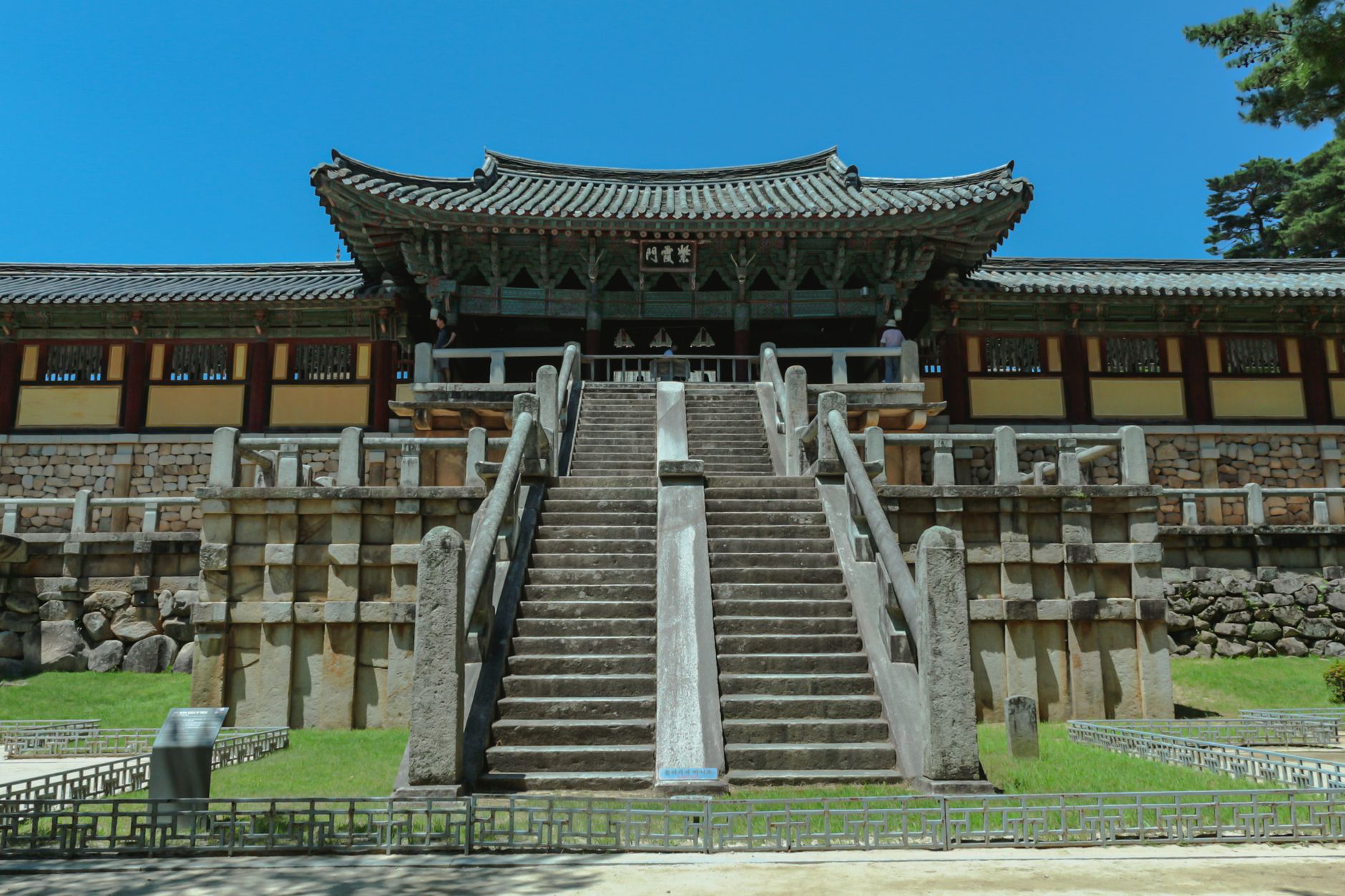
Eastern Gyeongju — UNESCO-listed Bulguksa Temple (the most important Buddhist temple in Korea) in mountain-forest setting. Plus nearby Seokguram Grotto. Strong full-day pivot.

Lake · resort · slow

Bomun Lake resort

Eastern Gyeongju — the modern resort area around Bomun Lake with hotels, cherry-blossom walks in April, and the slower-Gyeongju rhythm. Strong base for families.

Royal palace · night views

Anapji + Wolji Pond

Royal palace pond complex — the canonical Gyeongju night photo with reflected pavilions. Easy to combine with downtown walk.

Traditional · UNESCO · slow

Yangdong Folk Village

30 minutes north — UNESCO-listed traditional Joseon-era village with preserved hanok homes. Strong half-day pivot for traditional-architecture travellers.

Top sights

Top sights in Gyeongju

A focused starting set of anchors to help shape the destination into real days.

SORTIE PLACEBell of King Seongdeok
01
Bell of King Seongdeok
Bell of King Seongdeok is a landmarks. It is best understood through the local role it plays in the surrounding area.
60–90 min
SORTIE PLACEBulguksa
02
Bulguksa
Bulguksa is a landmarks. It is best understood through the local role it plays in the surrounding area.
60–90 min
SORTIE PLACEBunhwangsa
03
Bunhwangsa
Bunhwangsa is a top_attractions. It is best understood through the local role it plays in the surrounding area.
60–90 min
SORTIE PLACECheomseongdae
04
Cheomseongdae
Cheomseongdae is a landmarks. It is best understood through the local role it plays in the surrounding area.
60–90 min
SORTIE PLACEDabotap
05
Dabotap
Dabotap is a landmarks. It is best understood through the local role it plays in the surrounding area.
60–90 min
SORTIE PLACEDaereungwon
06
Daereungwon
Daereungwon is a landmarks. It is best understood through the local role it plays in the surrounding area.
60–90 min
Day trips

Day trips from Gyeongju

Half-day and full-day extensions that work without breaking the rhythm of a Gyeongju-anchored trip.

Full day

Bulguksa + Seokguram

Bulguksa Temple (UNESCO) + Seokguram Grotto (UNESCO) — the canonical Gyeongju historical day. Both deserve full-time visits; the grotto is a 30-min hike up from Bulguksa.

Half day

Yangdong Folk Village

30 minutes north — preserved Joseon-era village. Strong half-day pivot.

Full day

Busan

1 hour by KTX or bus — coastal Korean city. Strong full-day pivot or one-night extension.

SORTIE PLACEPohang + Homigot sunrise
Full day

Pohang + Homigot sunrise

1 hour east — coastal city with Homigot sunrise plaza (Hand of Harmony sculpture) and steel-mill industrial heritage. Strong specialised pivot.

Tours & Experiences

Browse current Gyeongju availability on Viator while curated picks are being added.

SORTIE PLACEPopular Gyeongju tours

Popular Gyeongju tours

Browse bookable experiences currently available for Gyeongju.

SORTIE PLACEGyeongju sightseeing

Gyeongju sightseeing

Browse guided sightseeing around Gyeongju's landmarks and local highlights.

SORTIE PLACEPrivate Gyeongju experiences

Private Gyeongju experiences

Browse private and small-group options for a more flexible day in Gyeongju.

SORTIE PLACEDay trips from Gyeongju

Day trips from Gyeongju

Browse bookable half-day and full-day excursions around Gyeongju.

SUGGESTED ITINERARIES
Itineraries for Gyeongju
Public itineraries for Gyeongju are still being added. Start a new trip and Sortie will shape day pacing, anchor sequencing, and neighborhood blocks for you.
Start a trip
People who planned Gyeongju also looked at

Related destinations

Gyeongju FAQ

Things travellers usually want to know before Gyeongju.

How many days do you need in Gyeongju?

One to two nights. One day Bulguksa + Seokguram + Anapji evening, optional second for Yangdong Folk Village + downtown Tumuli Park + Cheomseongdae walk. Less and you can't do justice to both UNESCO sites; more without a serious side trip and the rhythm repeats.

Is Gyeongju worth visiting?

Yes — Korea's most consequential historical city, with UNESCO-listed Bulguksa Temple + Seokguram Grotto as the strongest historical anchor in the country. Comparable to Kyoto in historical density but smaller and quieter. Combine with Busan for a strong southern-Korea pair.

Where should you stay?

Bomun Lake resort area for first-time access (newer hotels, easy logistics) or near Tumuli Park / downtown for walking-friendly base. Traditional hanok stays in the old quarter for atmospheric stays. Skip city-edge motels unless price is the only factor.

How do I plan Bulguksa + Seokguram?

Bus 10 or 11 from downtown to Bulguksa (about 30 min) — start with the temple itself (allow 2 hours). Then take the bus or hike 30 minutes up to Seokguram Grotto (UNESCO-listed Buddha statue in a domed cave). Allow another 90 minutes. Strong canonical Gyeongju day.

Should I do the cherry blossom timing?

Yes if your dates align — early April Bomun Lake is genuinely one of Korea's strongest cherry-blossom spots, with the lake-side walks at peak. Crowds are heavy but manageable; book hotels 1–2 months ahead. Outside cherry-blossom season, Gyeongju is the calmer canonical version.

How does Gyeongju compare to Kyoto?

Similar role (former imperial capital with historical density) but smaller scale and quieter. Kyoto has more individual sites + a working city around them; Gyeongju has the major UNESCO anchors + a small modern town. Both are strong historical-day destinations; Kyoto needs more time, Gyeongju is more focused.

Should I rent a bike?

Yes — Gyeongju has bike rentals downtown and a dedicated bike trail system around the major sites (Tumuli Park, Wolseong Palace ruins, Anapji). The downtown sites are easily bikeable; outer sites (Bulguksa, Yangdong) need bus or taxi. Strong morning bike loop for the city core.

What's the biggest planning mistake?

Day-tripping Gyeongju from Busan or Seoul. The Bulguksa + Seokguram morning alone needs 4 hours, and the canonical Anapji night visit means staying overnight. Two nights minimum lets you fit both UNESCO sites + the canonical downtown anchors.

Ready when you are

Plan your Gyeongju trip, properly.

A clean itinerary in under five minutes — anchors, dwell times, walking distances, done properly.

Create your Gyeongju trip See an example trip
NO CREDIT CARD · 2 MIN TO START